
HR Magazine: How to hire for personality, not just experience
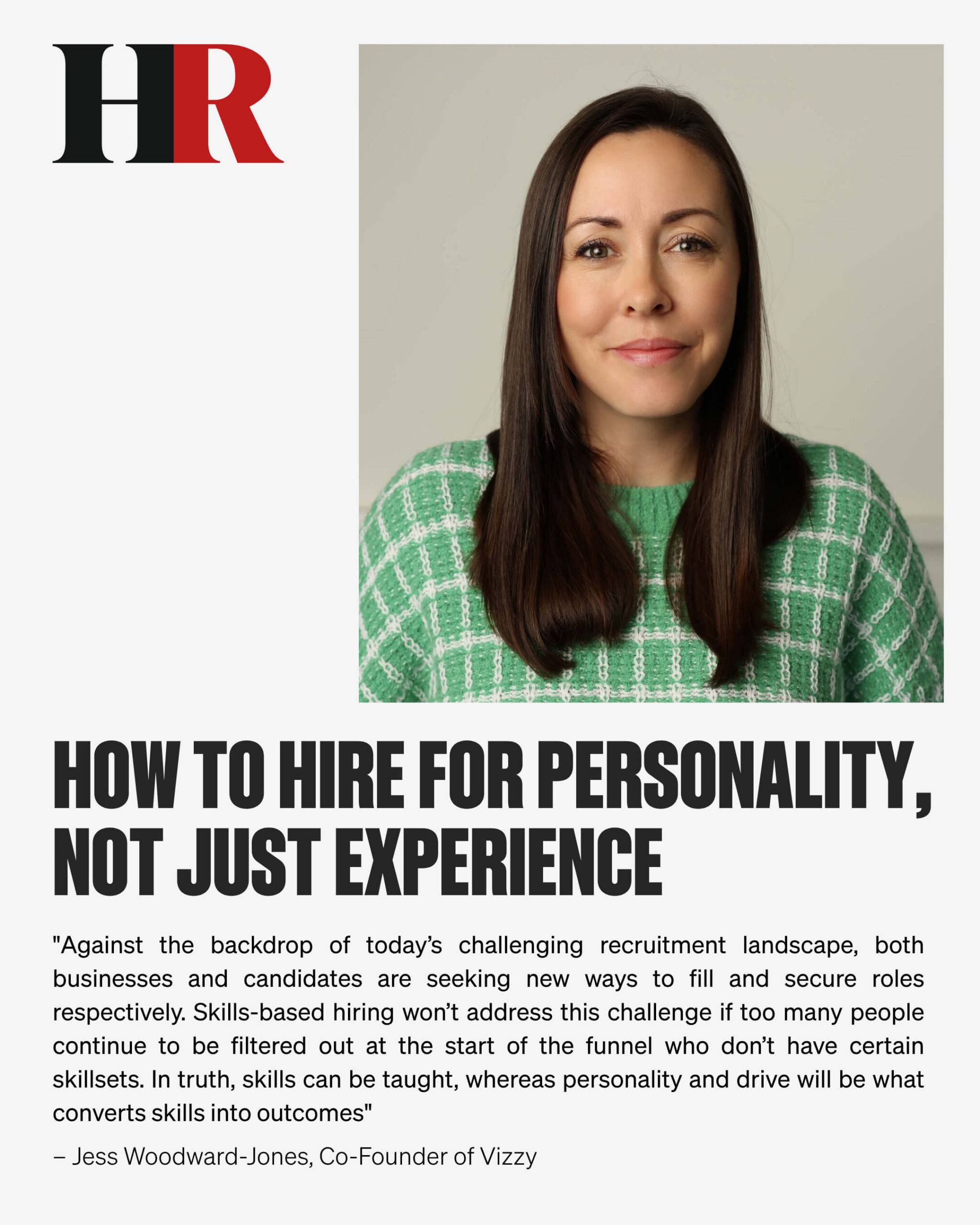
By Jess Woodward-Jones, co-founder of Vizzy for HR Magazine
Talent can’t be judged by work experience alone. Let’s give personality more consideration in the hiring process.
Making the wrong hire can be extremely costly for business, when you take into account the loss of productivity, advertising, recruitment and training costs, plus hiring interim freelancers.
While decisions to employ someone are often based on relevant experience, equally important is a candidate’s personality, determining what they can add to a company’s culture and whether they’ll remain in the role. Yet these attributes are not given enough consideration early in the hiring process, often leading to poor hiring decisions.
Soft skills such as communication, empathy, a sense of humour and even vulnerability are business-critical. Yet they’re near impossible to see and assess through traditional processes, CVs and cover letters, leaving talent acquisition (TA) teams trying to assess character via phone or video call.
Talent is more than work experience and grades, it’s how you think, what you create, and the energy you bring. So how can businesses hire for personality, not just experience?
Consider your employer brand
It all begins with how you convey your employer brand; the way in which a business articulates its culture and values, how it talks about roles and the guidance it gives to potential candidates during the application process. This is crucial to ensure that candidates have sufficient information about the company, the team, and the position, so that they can understand what to demonstrate in their application. Virgin Group are one of the best organisations at doing this, which is part of the reason so many people want to work there.
Remodel the CV
The first known CV was created by Leonardo DaVinci in 1482. Is it any wonder therefore that, for many industries, the traditional CV is no longer fit for purpose? An A4 page simply does not allow the space to showcase who you are as a candidate and what you can bring to the role. Yes, you can list recent work experience and exam grades, but how can you truly illustrate your beliefs, your passions and your aspirations?
Moreover, traditional CVs are becoming harder to interpret in the age of AI, with many candidates submitting applications at scale, often reading like-for-like.
Businesses are re-evaluating their application process, introducing new tools to reduce screening burden, sharpen shortlists and deliver better hiring outcomes, whilst giving candidates the opportunity to stand out. Technology allows for a more interactive and creative application process so that companies can uncover far richer insights into candidates’ potential and motivations.
Focus on storytelling
Humans are inherently storytellers, sharing information through narratives to make sense of the world. For businesses, in order to hire for personality they must give candidates an opportunity to tell their story earlier on in the process, from the way in which they submit their initial application, how they demonstrate their aspirations and passions, and the platform they are given at interview stage to articulate their story.
Think about questions
We’ve all been interviewed with the same standard questions: ‘Why do you want to join our team?’, ‘What value do you think you can add?’ ‘What are your strengths and weaknesses?’ While these can be useful prompts, they don’t really give a full insight into a candidate’s personality.
Instead, businesses should make their questions more personable to allow candidates to demonstrate who they really are. Questions like: ‘What project have you recently done that you are proud of; how did you overcome any challenges?’ and ‘What’s been the best team you’ve been part of and why?’.
These will lead to a far better understanding of a candidate’s personality, approach and culture-add. With company culture constantly evolving, it’s less about whether a candidate will ‘fit’ and more about what they will bring to a company.
Against the backdrop of today’s challenging recruitment landscape, both businesses and candidates are seeking new ways to fill and secure roles respectively. Skills-based hiring won’t address this challenge if too many people continue to be filtered out at the start of the funnel who don’t have certain skillsets. In truth, skills can be taught, whereas personality and drive will be what converts skills into outcomes.
What’s needed is a better understanding of a candidate’s personality, their perspectives and passions, their inspirations and their ideas. These are vital ingredients for determining how suited they are to a business and what will ultimately lead to better hiring outcomes.
Related stories
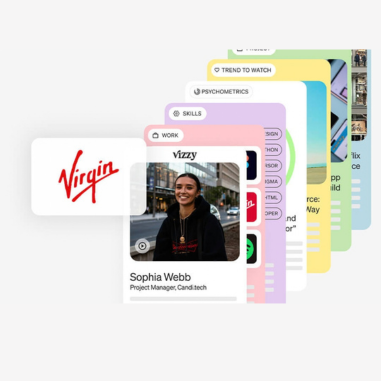
Why Virgin Group ditched traditional CVs in favour of ‘Vizzy’ digital profiles
By Peter Crush for HR Grapevine Virgin Group has partnered with technology company, Vizzy to give jobseekers a chance to give their…
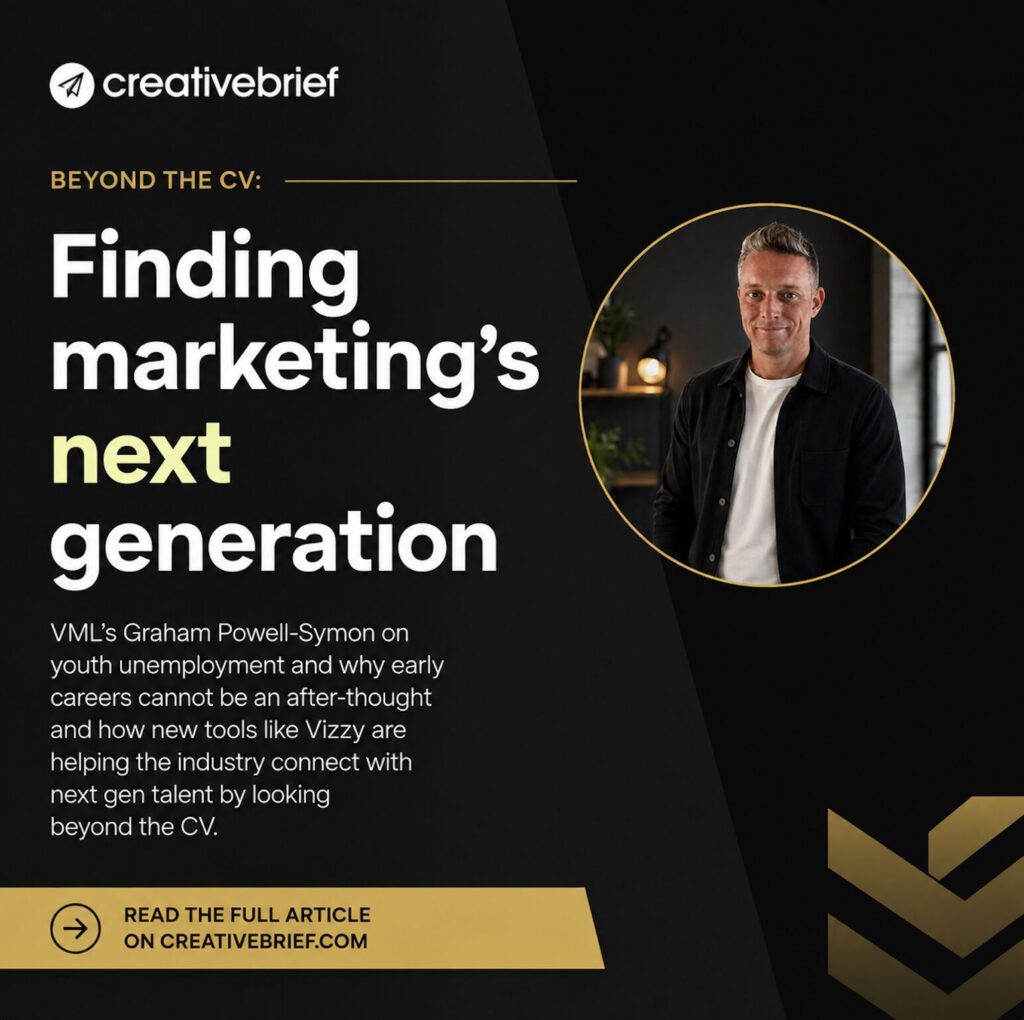
Beyond the CV: Finding marketing’s next generation with VML
As AI reshapes entry-level careers and traditional CVs reveal less about candidates’ potential, VML is rethinking early-career recruitment. Graham Powell-Symon explores how Vizzy helps uncover the curiosity, creativity and initiative behind the application.
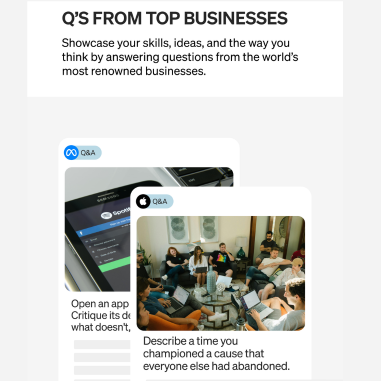
New Feature on Vizzy: Brand Q&A
Vizzy’s new Brand Q&A feature gives candidates another way to go beyond the CV, answering real questions from leading brands to showcase how they think, create and solve problems—with multimedia bringing their answers to life.